
Rome Previous Residents by Record Era
Rome previous residents are best traced as dated address associations. Set down the exact Rome situs address first, then the county GIS PIN and the current roll-year owner shown by the City of Rome or county source. From there, the years tell you which record can answer the next question. The annual Rome roll is an ownership checkpoint. A Rome deed establishes a recorded conveyance. A Rome directory can associate a person or business with an address at publication time. A Rome map can describe a structure but not a household. Keeping those roles separate prevents a quick search from becoming an unsupported occupancy claim.
| Rome source | Period available | Custodian or route | Best use in the timeline |
|---|---|---|---|
| Rome Image Mate and county GIS | Current, with roll-specific detail | City assessor and County Planning | Exact Rome situs, PIN, parcel geography, property inventory, and current roll context |
| Oneida County tax-roll archive | 2024-2026 | County annual PDF archive | Rome roll-year owner, mailing address, class, school district, assessment, and deed-book/page fields |
| SearchIQS deed index | Index/data 1963-1974; index/images generally 1974 forward | Oneida County Clerk | Recorded Rome grantors and grantees, instrument dates, and image availability |
| Rome directories | 1857/58, 1859/60, 1866/67, and 1871/72 baseline holdings | New York State Library | Dated directory listings and printed street forms |
| Rome Sanborn material | 1909 verified, with a 1930 reference verified | Library of Congress and local-history sources | Building footprint, use, and map context, not a list of people |
Start with the recent Rome parcel if the question is who lived here before in the modern record period. Begin with a Rome directory or newspaper if the only date is historical. In either direction, return to the PIN and legal description before joining two records that use a slightly different house number or street spelling.
Rome Previous Residents Need a Parcel Timeline
Rome’s city and county records describe the same address in different ways. The Rome Image Mate portal can provide the assessment and property-inventory view, while the Oneida County interactive map supplies parcel geography. The county’s tax-roll archive preserves the 2024, 2025, and 2026 snapshots. Copy the PIN exactly, including its punctuation and leading zeros, because it is the bridge between a printed Rome roll, a map result, and an instrument reference.
Do not merge the labels these Rome sources use. A Rome roll owner is the person or entity printed for that roll year. A roll mailing address is correspondence information. A directory-listed person is someone printed at an address in that volume. An actual occupant needs evidence from an appropriate dated source. A transfer may occur between annual roll dates, and a roll update may reflect an estate, correction, parcel split, or mailing change rather than a move. Keep transaction, recording, assessment, directory-publication, and access dates in separate columns.
Note: A Rome PIN identifies an assessment unit, but a historic legal description may cover a predecessor parcel, a subdivision lot, or a later merged parcel.
Rome Property Records and SearchIQS
The Rome deed chain starts after the parcel is pinned down. Oneida County’s recorded-land search is party keyed, so a Rome address alone is not a complete route through the instruments. The SearchIQS search-screen guide shows the name, date, document-group, town, book/page, instrument-number, and case-number controls. Enter party names last name first and without punctuation. A surname variation, initials, a wildcard, and a bounded date range can help when a record does not appear under the first spelling tried.
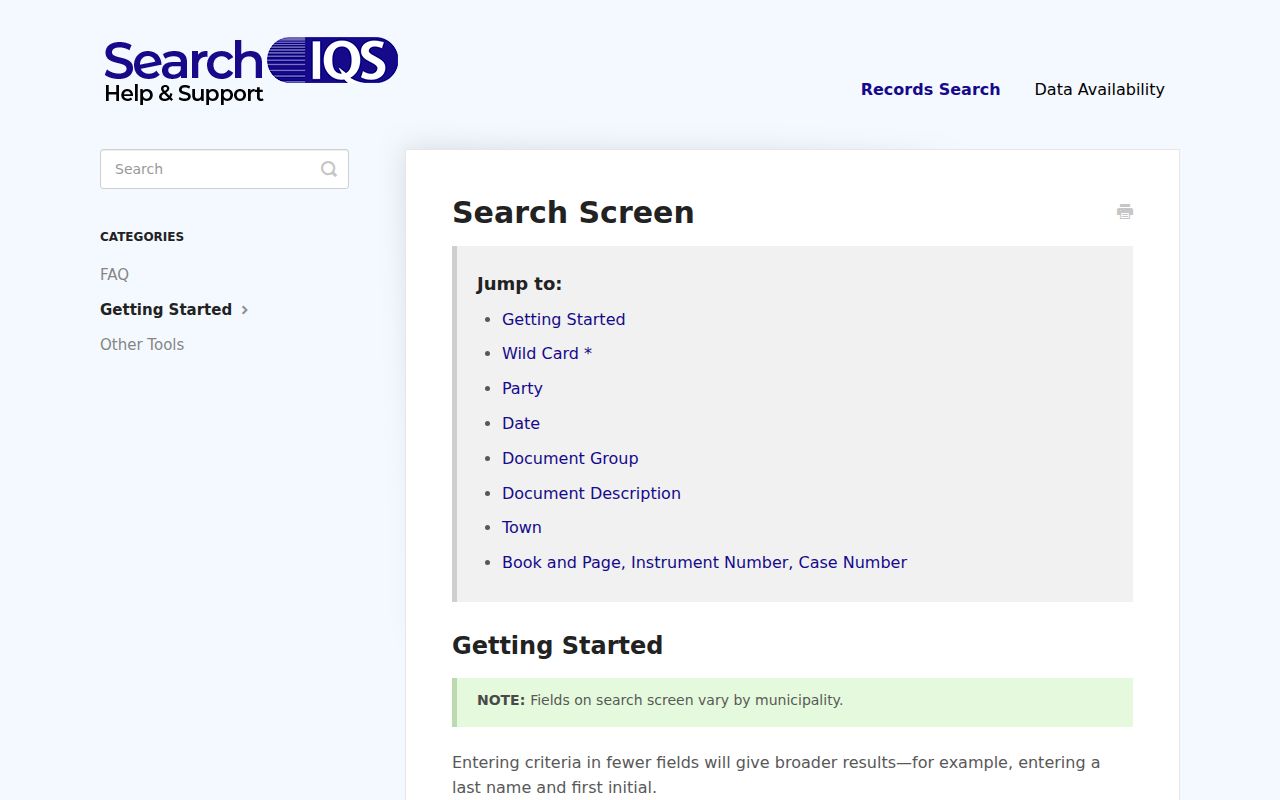
The search controls are a way to isolate a likely recording, not proof that a person lived at the Rome address. Confirm the document group, recording date, parties, and legal description before adding it to a Rome prior-owner timeline.
- Record the current Rome situs, GIS PIN, legal description, roll year, owner as printed, and any deed book/page shown in the tax roll.
- Search the current owner as a grantee in the recorded-deed material, using a date range and document group where needed.
- Read the matching instrument for the earlier grantor, recording date, book/page or instrument number, and image status.
- Search that former grantor as a grantee to locate the prior acquisition, then repeat the same documented handoff backward.
- Move to County Clerk public computers, archival books, or a request when the online years or image availability end.
- Grantor
- The party conveying an interest in a recorded instrument.
- Grantee
- The party receiving that recorded interest.
- Chain of title
- A documented sequence of conveyances for an interest in a parcel, not a timeline of everyone who occupied it.
- Legal description
- The lot, map, metes-and-bounds, or other property description in the instrument. It is more durable than a street address when numbers or parcel boundaries change.
Rome Record Index Leads and Books
Rome online coverage has an important break. The County Clerk legend reports deed index/data from 1963 through 1974, with images generally available from 1974 forward. An index-only Rome result is still a useful lead, especially when it supplies a party, recording date, instrument number, or liber and page. It is not a substitute for the instrument. The SearchIQS results guide explains that result rows can be sorted and that image access, related documents, printing, downloads, and payment can vary.
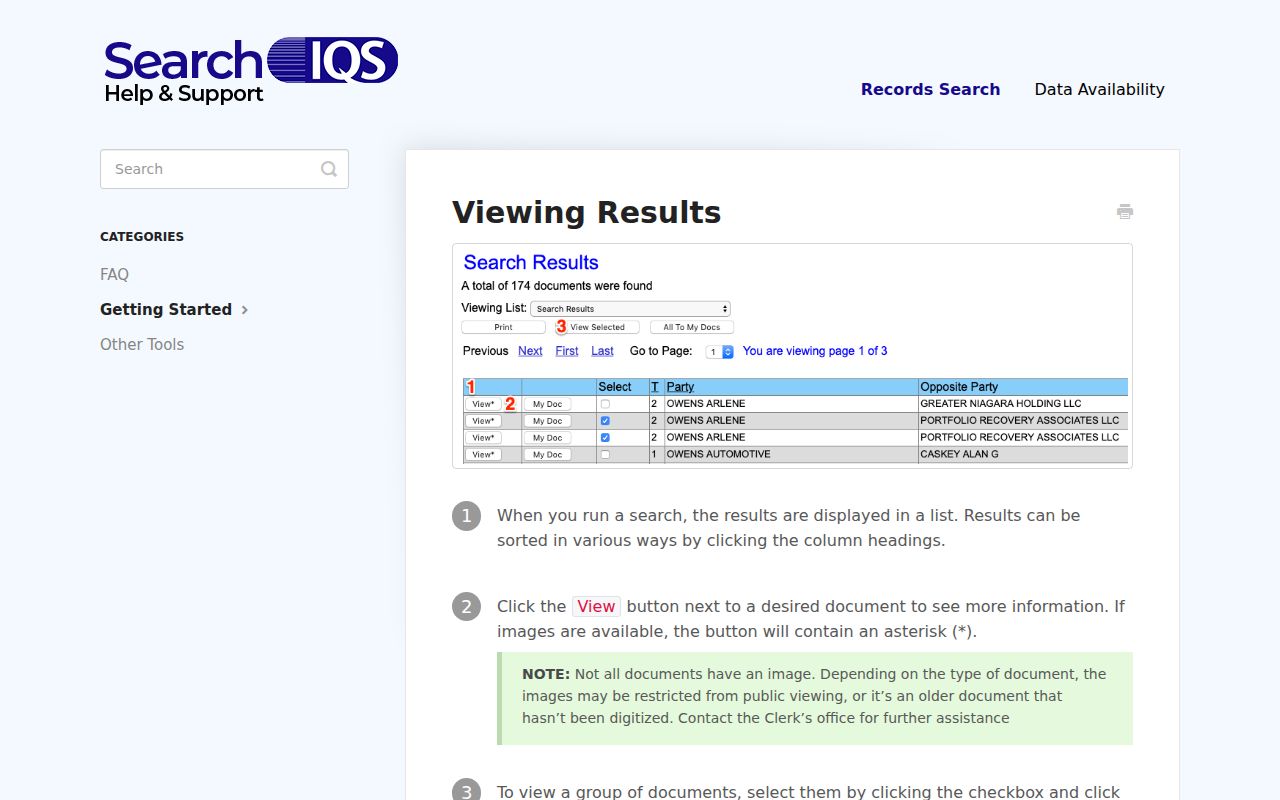
Check the image indicator and the relevant Rome year before treating a row as a document image. A missing image can reflect the online coverage boundary rather than the absence of a recorded deed.
The SearchIQS Index Books and Early Books guidance describes the historical-book route. Those books can extend Rome research beyond a standard result screen, but they may not include images. Preserve every book/page citation and use the clerk’s copies or archival materials to test the entry.
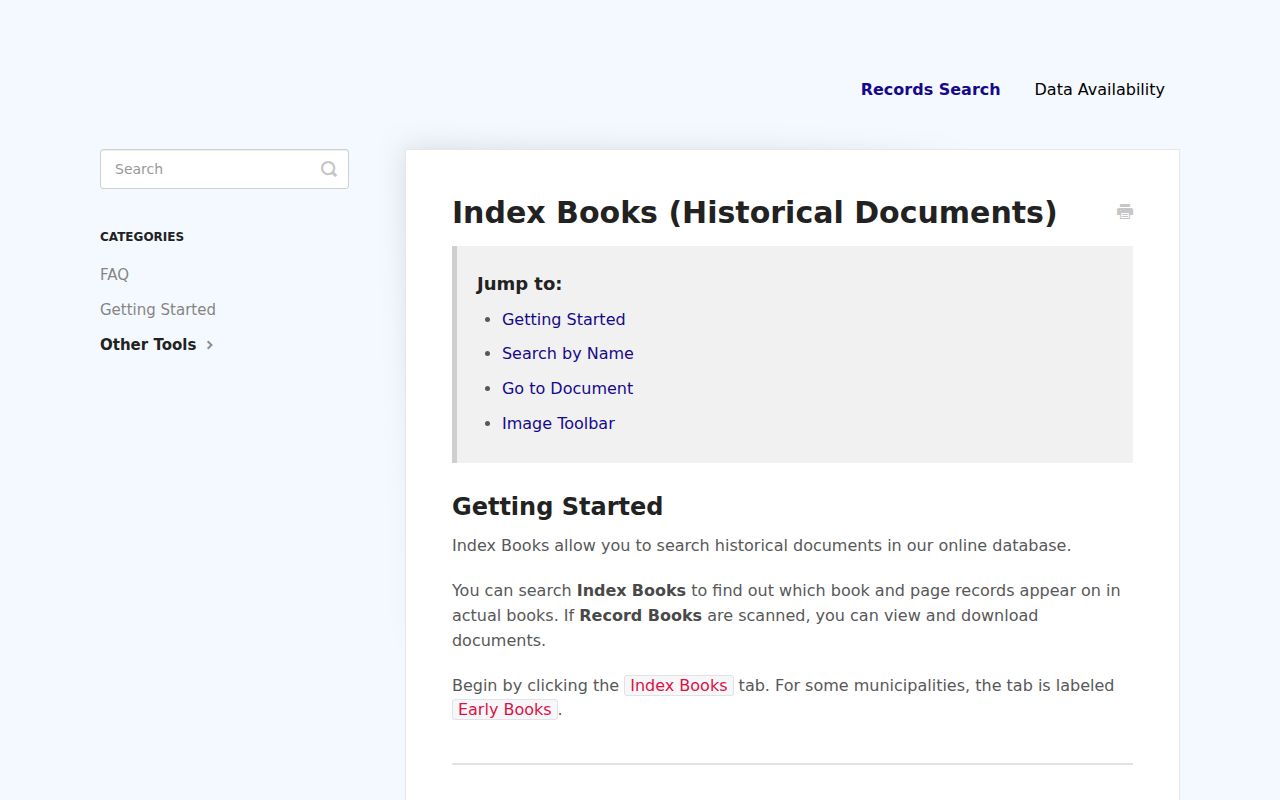
The historical-books view is most useful when it narrows a Rome request to a specific record series and interval. It does not fill a missing deed with assumptions about a name or a parcel.
Rome Past Residents in Directories
Ownership is only one part of a Rome address history. The New York State Library’s city-directory guide documents Rome holdings for 1857/58 and 1859/60 on fiche, 1866/67 on film, and a 1871/72 Utica/Rome Area volume on film. The 1934 Rome directory scan provides a later example. Its shorthand can include h for home, wid for widow, emp for a work reference, and occupation terms. OCR is a finding aid only, so inspect the page image before transcribing an entry.
Pair an address listing with the closest available census date, then test it against a deed, tax roll, newspaper, yearbook, cemetery reference, or the local-history collection. The fuller collection history and access locations remain on the Rome city directory page; an address trail needs only the volume that can independently test the date in question.
- Transcribe the directory year, title, page, printed street form, house number, and every abbreviation exactly as shown.
- Place the entry beside the nearest census year without assuming either source covers the same day or the same address format.
- Compare the printed address to the PIN, legal description, and deed-chain interval before calling it the same parcel.
- Use the State Library’s Oneida newspaper guide, Jervis yearbooks, or cemetery material to test a move, sale, death, or spelling.
- Write any conflict plainly, such as a directory listing at an address while title records name another owner.
Note: A directory captures a publication-period association, while a census, deed, and roll each use their own dates and purposes.
Rome Address Records Need Evidence
Rome’s records geography is a useful check on older Rome addresses. A printed street number, a modern postal form, a municipal assessment record, a county PIN, and a legal parcel description can point toward the same place without proving that they do. No official street-renumbering schedule was located in the research. Treat an apparent match as “address equivalence proposed” until a map, deed legal description, city record, or consecutive directory confirms it.
The Library of Congress 1909 Rome Sanborn collection has 34 sheets and can add building footprint, construction, use, and fire-risk context. A 1930 Rome map reference was also verified. Neither is a household roster. Sanborn material can help test whether a building or lot existed at the right location, but it cannot establish who lived there before.
Rome House Records Beyond Deeds
Rome property changes sometimes leave a trail outside the deed index. Image Mate can show square footage, lot size, property inventory, and assessment changes. Rome Code Enforcement may hold files for additions, conversions, pools, decks, demolition, fire repair, and related work. No official public online permit index was located. A narrow request that states the address or PIN, the date range, and the type of record is more likely to produce a useful answer than a broad request for a house history.
The Oneida County Clerk records-request page documents the mail, online, and in-person route for county searches. The office charges $5 for each two-year period searched after payment, while in-person public-computer and archival-book searching has no search fee. County printouts cost 65 cents per page, with a $1.30 minimum. A staged interval around a likely transfer can reduce unnecessary searching.
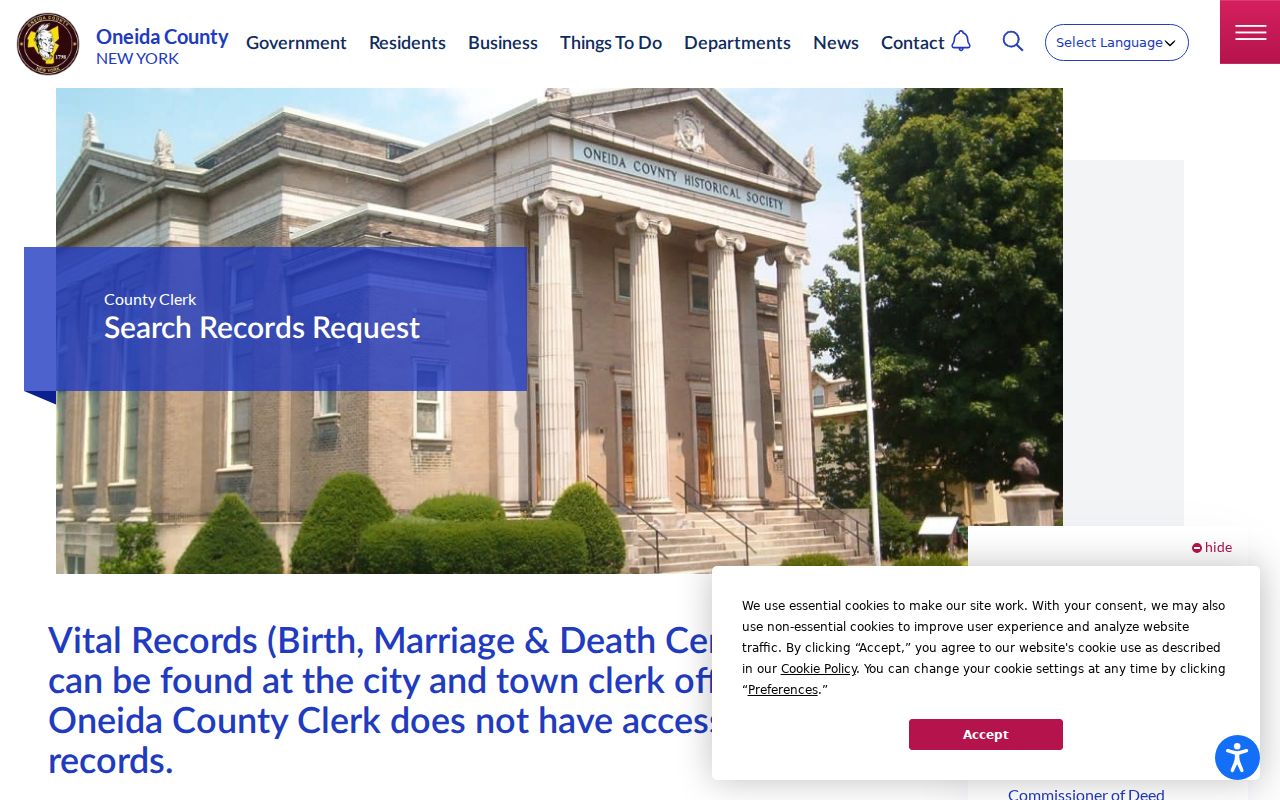
For a city permit file, use Rome Code Enforcement or City FOIL instead of the County Clerk request route. A permit can name an owner, contractor, or applicant, so its label belongs beside the date rather than being treated as proof of occupancy.
Rome Previous Residents and Record Gaps
A clean Rome timeline should display its gaps. Oneida County’s 1848 courthouse and jail fire helps explain why an early Rome court or administrative file may not survive in the expected form. The replacement courthouse opened in 1851, but a later directory or online index cannot recreate an unlocated 1840s file. Use surviving deeds, newspapers, naturalization material, the Regional Records Center, and Rome Historical Society collections as separate evidence, then state what remains unresolved.
Lawful house-history use. Research Rome past residents for family history, estate questions, neighborhood history, or personal curiosity. Do not use historic or current address information to track, harass, or harm anyone.
Strong results use restrained labels: “named in a deed,” “listed at this address,” “shown on a roll,” or “building appears on this map.” Those phrases leave room for later evidence and respect the difference between a record lead and a person’s private life.